October 4, 2026
How to Prepare Your Child for a Move: A Simple Timeline (Plus a Printable Checklist)
For adults, a move is a to-do list. For a child, it can feel like everything familiar is disappearing into boxes: their room, their street, the park, sometimes their friends and school. Kids handle big changes best when they know what's coming, have a small job to do, and can count on a few things staying exactly the same. Here's a simple timeline to help.
A few weeks before: tell them, simply
Young children don't have a strong sense of time, so telling a 3-year-old months ahead can just mean months of worry. For toddlers and preschoolers, a few weeks' notice is usually plenty; school-age kids can handle more time and more details. Keep the first conversation short and concrete: where you're going, why, and what will stay the same. "We're moving to a new house. Your bed, your toys and our family are all coming with us."
Expect questions to come out in pieces, often at bedtime or in the car. Answer honestly, and it's okay to say "I don't know yet, but I'll tell you when I find out."
While you pack: give them a job
Feeling helpless makes change scarier. Give your child a role: decorating their own boxes, choosing which toys to pack last, or labeling a box with their name. One of the most useful jobs is a special box of favorite things that travels with them in the car and gets unpacked first in the new room.
If you can, show them the new place before moving day: a visit, a drive past, or photos and a video of their new room and the nearest playground. A picture of "your new room" gives their imagination something real to hold onto.
Saying goodbye
Goodbyes help kids close one chapter before starting the next. Take photos of their room and favorite spots, walk around the house and say goodbye to each room, or make a card for a friend or neighbor. If they're sad, let them be sad. You don't need to talk them out of it, and "It's okay to miss our old house" is often all they need to hear.
Moving day and the first night
If possible, set up your child's room first, so there's one finished, familiar space in a house full of boxes. On the first night, keep the bedtime routine exactly the same: same pajamas, same stuffed animal, same story. New rooms look and sound different in the dark, so a night light and a quick check of the closet can help.
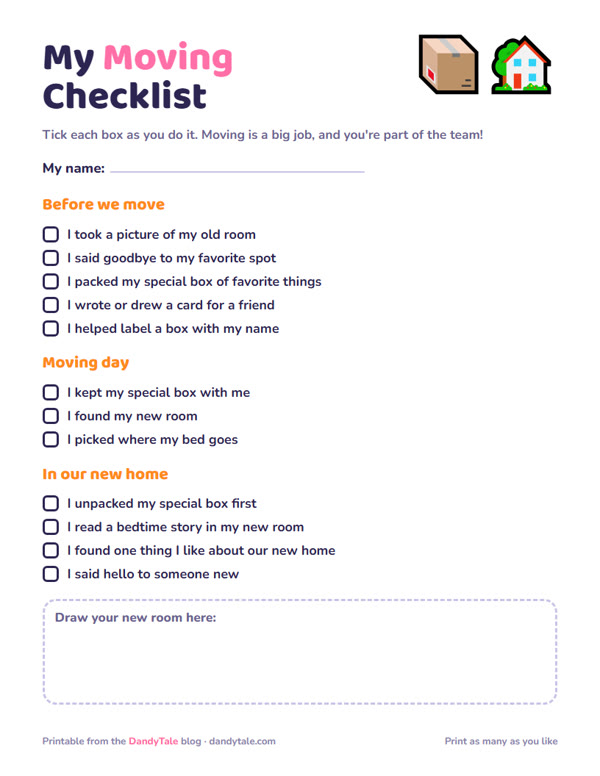
My Moving Checklist (for kids)
One page, US Letter. Print as many as you like.
Print the checklist (PDF)The checklist above gives kids small, concrete jobs for before, during and after the move, plus a space to draw their new room. Print one and let your child tick the boxes as you go.
The first few weeks
Some kids sail through a move and then wobble a few weeks later, once the excitement wears off. Clinginess, trouble sleeping or a step back with things like potty training are common reactions to big changes in young children, and they usually pass as the new place becomes familiar. Keep routines steady, explore the new neighborhood together, and look for a chance to meet other kids, like a playground, a library story time or a neighbor's porch.
Use a story to rehearse
A story lets your child watch a character go through the same change: packing up the old room, walking into an empty house, the first strange night, meeting new neighbors. It's often easier for kids to talk about how a character feels than about themselves. DandyTale has story ideas for each step of a move, written at three reading levels and illustrated on every page. Books are $4.99 each.
Story ideas
- Halloween Stories for KidsHalloween story ideas you can make tonight
- Thanksgiving Stories for KidsThanksgiving story ideas you can make tonight
- Christmas Stories for KidsChristmas story ideas you can make tonight
- First Day of School Stories for KidsFirst day stories for every grade
- New Baby Sibling Stories for KidsBig sibling story ideas
- Moving to a New House Stories for KidsStory ideas for a family move