October 4, 2026
How to Prepare Your Toddler for a New Baby: What to Say, What to Read and When
A new baby is one of the biggest changes in a young child's life, and one of the hardest to explain. Toddlers and preschoolers don't really know what a baby will mean until it's crying in the next room. You can't prepare them for everything, but you can make the idea familiar, give them words for their feelings, and make sure they know their place in the family is safe.
When to tell them
Many families tell young children once the pregnancy is visible or other people start talking about it, so they hear it from you first. Because toddlers don't understand months, tie the timing to something they know: "The baby will come when it's cold and snowy" or "after your birthday". Older preschoolers may like a simple countdown in the last few weeks.
What to say
Be concrete and honest. Many kids imagine a ready-made playmate and are disappointed by a tiny person who mostly sleeps and cries. Tell them what babies are really like: "Babies are very small. They sleep a lot, they cry when they need something, and they can't play yet. When the baby gets bigger, you can teach them things."
Looking through your child's own baby photos is a great way in. It shows them what babies are like, and it shows them that they were once cared for in exactly the same way.
Big changes: do them early, or wait
If your child is going to move to a big bed, change rooms or start preschool, try to do it well before the baby arrives, or wait until things settle afterwards. That way the change doesn't feel like they're being pushed out to make room for the baby.
Give them a job
Toddlers love to feel capable. Let them help choose something for the baby, pick a toy to share, or practice being gentle with a doll. After the birth, small jobs like fetching a diaper, choosing the baby's socks or singing a song make them part of the team instead of a spectator.
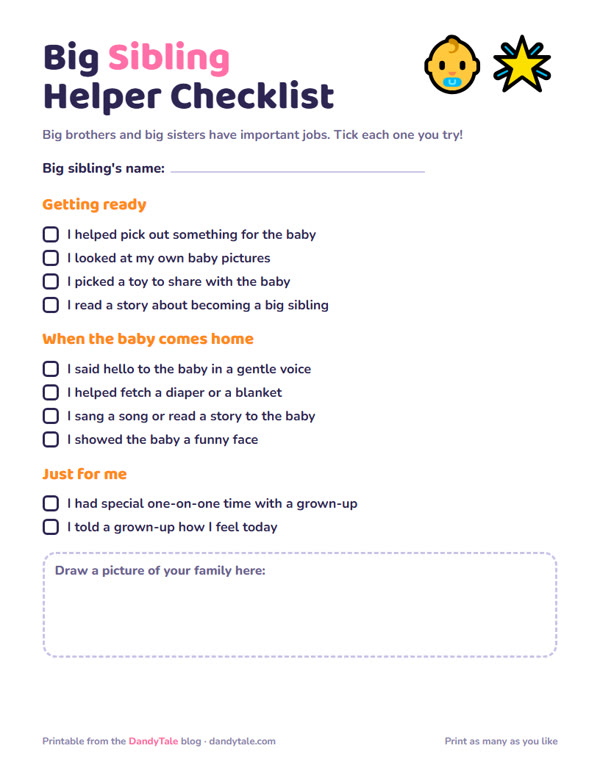
Big Sibling Helper Checklist
One page, US Letter. Print as many as you like.
Print the checklist (PDF)The checklist above has simple jobs for before and after the baby comes home, a "just for me" section for one-on-one time, and a space to draw the family. Ticking boxes gives a toddler something proud to show a visitor besides the baby.
After the baby comes home
Mixed feelings are normal. Your child may adore the baby one minute and ask when it's going back the next. Name the feelings without judging them: "It's hard when the baby needs Mommy right now. You can feel upset and still be a great big sister." Some kids go back to baby talk, want a bottle or have more accidents for a while; this is a common reaction and usually passes with patience and attention.
Protect a little one-on-one time every day, even ten minutes. A bedtime story with just the big sibling, while someone else holds the baby, can become the most important part of their day.
Read a big sibling story together
A story about a character becoming a big sibling lets your child see the worries and the happy ending before they live it. It's often easier to talk about how a character feels than how they feel. DandyTale has big sibling story ideas written at three reading levels, ages 2-4, 5-7 and 8-9, with every page illustrated. Books are $4.99 each.
Story ideas
- Halloween Stories for KidsHalloween story ideas you can make tonight
- Thanksgiving Stories for KidsThanksgiving story ideas you can make tonight
- Christmas Stories for KidsChristmas story ideas you can make tonight
- First Day of School Stories for KidsFirst day stories for every grade
- New Baby Sibling Stories for KidsBig sibling story ideas
- Moving to a New House Stories for KidsStory ideas for a family move